
The Storage Material That’s Quietly Replacing Upper Cabinets Leave a comment
For a very long time, including storage meant including weight. Extra cabinetry, deeper cabinets, thicker visible traces. However these days, I’ve been noticing kitchens and residing areas stepping into a unique course. As a substitute of filling partitions, designers are thinning them out.
What’s changing the strong mass of higher cupboards isn’t a brand new structure or a daring characteristic. It’s a fabric alternative. One which retains storage useful whereas letting rooms really feel lighter, extra open, and fewer crowded. Glass shelving is beginning to present up the place closed cabinetry used to dominate, not as show, however as on a regular basis storage that doesn’t visually take over the room.

What’s fascinating is that cup cabinets aren’t getting used to indicate off much less, however to make on a regular basis storage really feel lighter, extra intentional, and simpler to stay with.
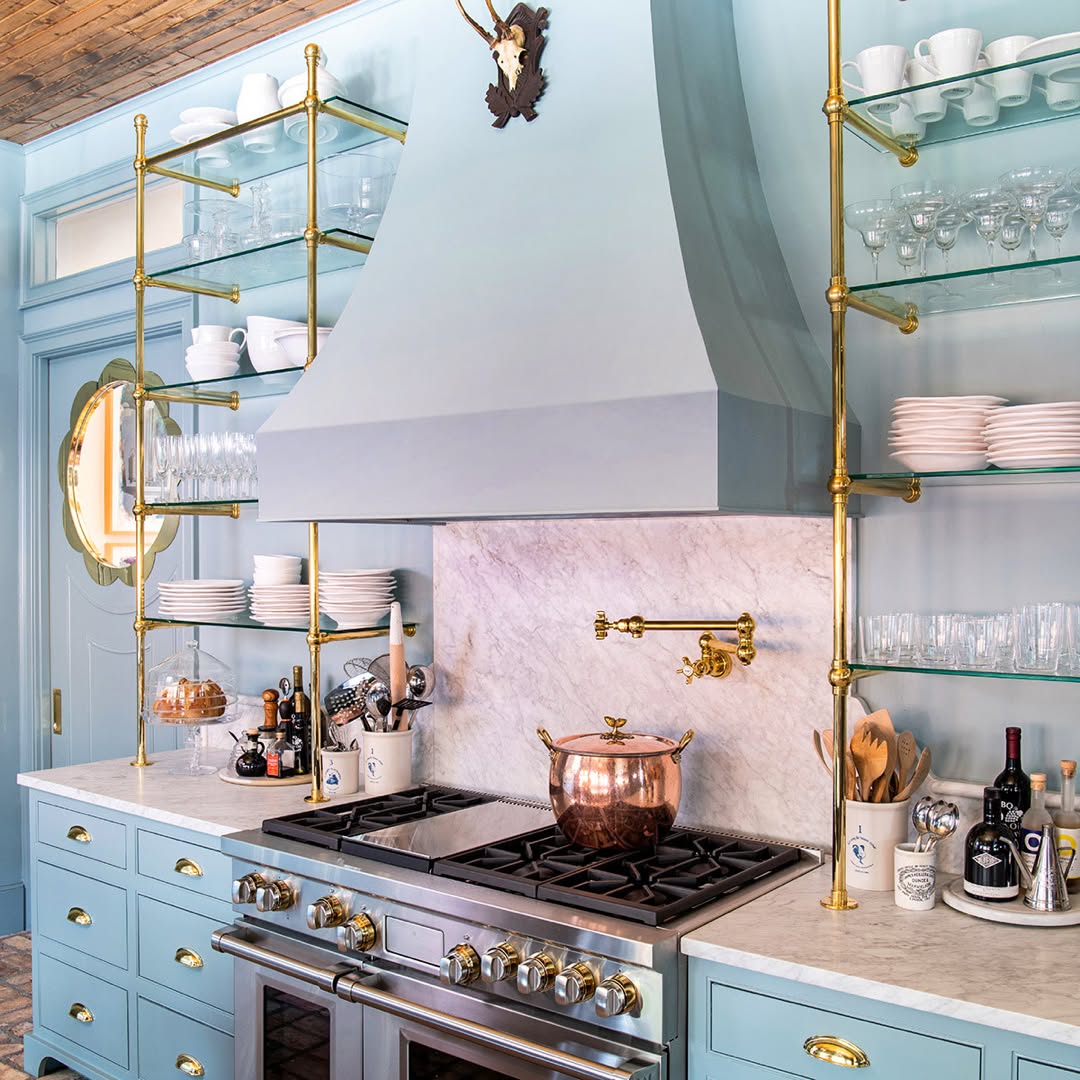
A glass shelf setup that replaces higher cupboards with out shedding perform
What stands out on this kitchen isn’t the colour or the vary, however how the storage behaves. As a substitute of conventional higher cupboards, glass cabinets framed in brass run alongside each side of the cooking zone, holding dishes, glassware, and day by day necessities with out closing within the area. The cabinets really feel structural quite than ornamental, which is why they work as true replacements, not accents.
I’m seeing this strategy extra typically in kitchens that need openness with out giving up usability. The transparency of the glass retains the wall clan, even when full stocked, whereas the metallic helps give the cabinets sufficient presence to really feel intentional. Nothing feels staged right here. The cabinets maintain what’s truly used, and since they don’t block gentle or sightlines, the kitchen stays breathable even with the whole lot out within the open.
Glass cabinets that flip an unused wall right into a working bar zone
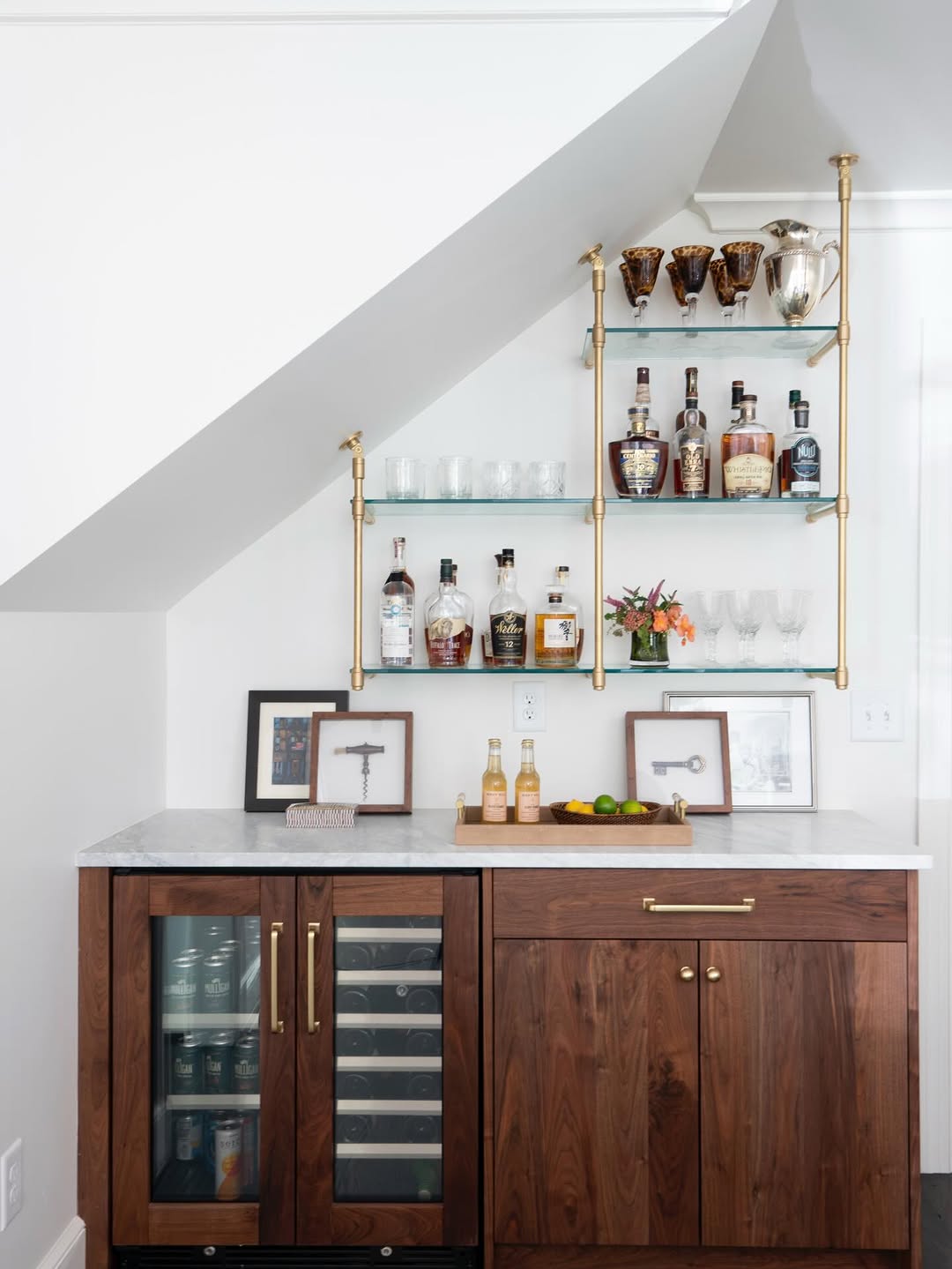
This setup exhibits how glass shelving works past kitchens. Tucked below a sloped ceiling, the cabinets remodel what may have been useless wall area into a totally useful bar with out including visible weight. The brass helps echo furnishings detailing quite than kitchen {hardware}, which helps the cabinets really feel intentional as an alternative of improvised.
What I discover right here is how the transparency retains the wall from feeling crowded, even with bottles, glassware, and serving items absolutely out within the open. Strong shelving would have compressed the area, below the angled ceiling. As a substitute, the glass lets gentle cross via and retains the bar space easy, whereas nonetheless conserving the whole lot inside arm’s attain. It’s a transparent instance of glass shelving getting used as actual storage, not show, and adapting to architectural constraints quite than preventing them.
A vertical glass shelf column that bridges kitchen and residing area
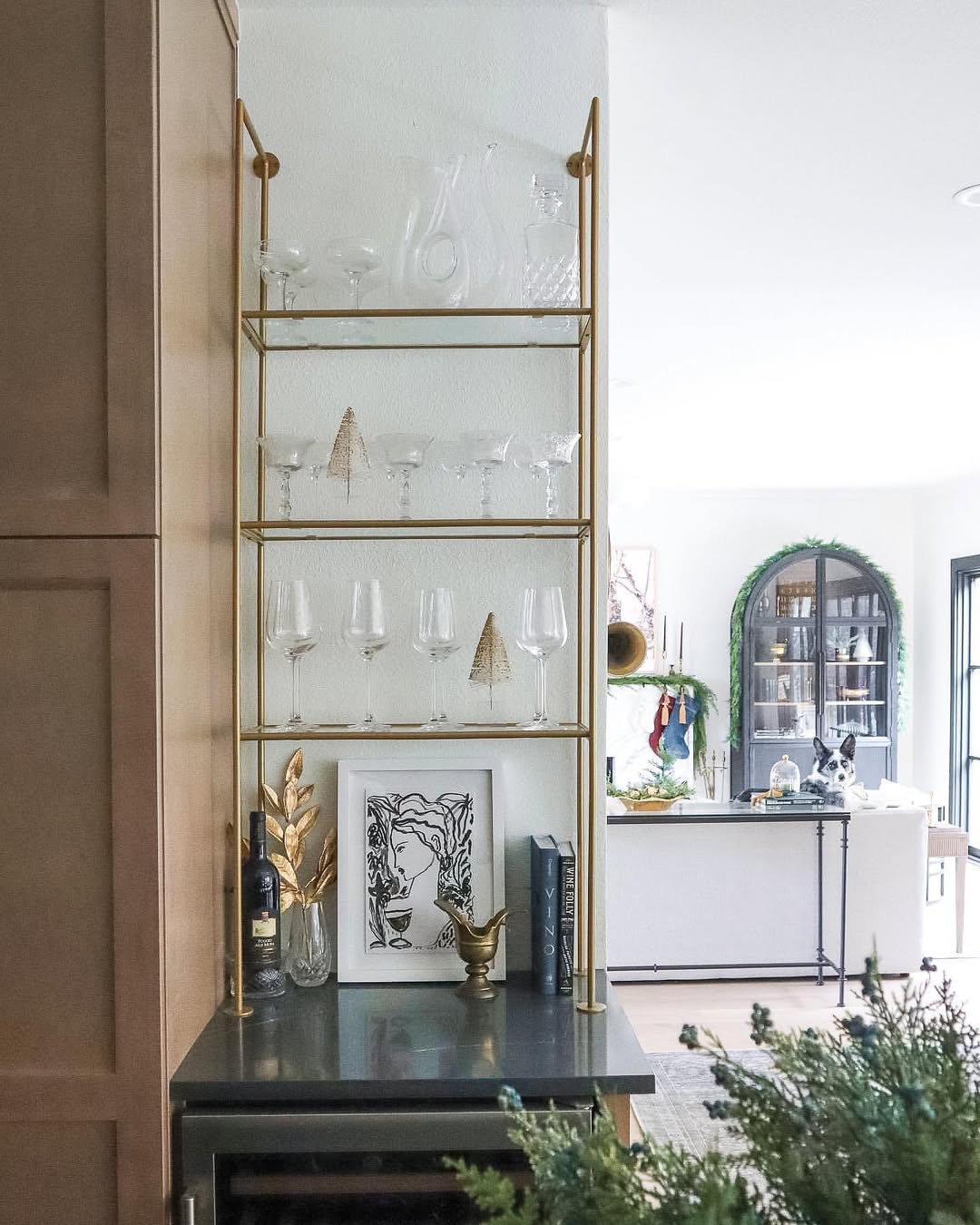
This glass shelving setup works as a result of it doesn’t attempt to fill the wall. As a substitute of vast runs or heavy cabinetry, the cabinets stack vertically, making a slim storage column that feels extra like furnishings than built-in storage. Positioned between the kitchen and residing space, it acts as a visible transition quite than a boundary.
What stands out is how the cabinets stability use and restraint. Glassware is saved overtly, however spacing and repetition preserve the column from feeling busy. The brass body provides the cabinets sufficient construction to learn as intentional, whereas the transparency permits the room past to remain seen. I’m seeing extra of those slender glass shelf moments in open layouts, the place storage must exist with out separating areas that are supposed to circulate collectively.
Glass cabinets used as architectural frames quite than storage partitions
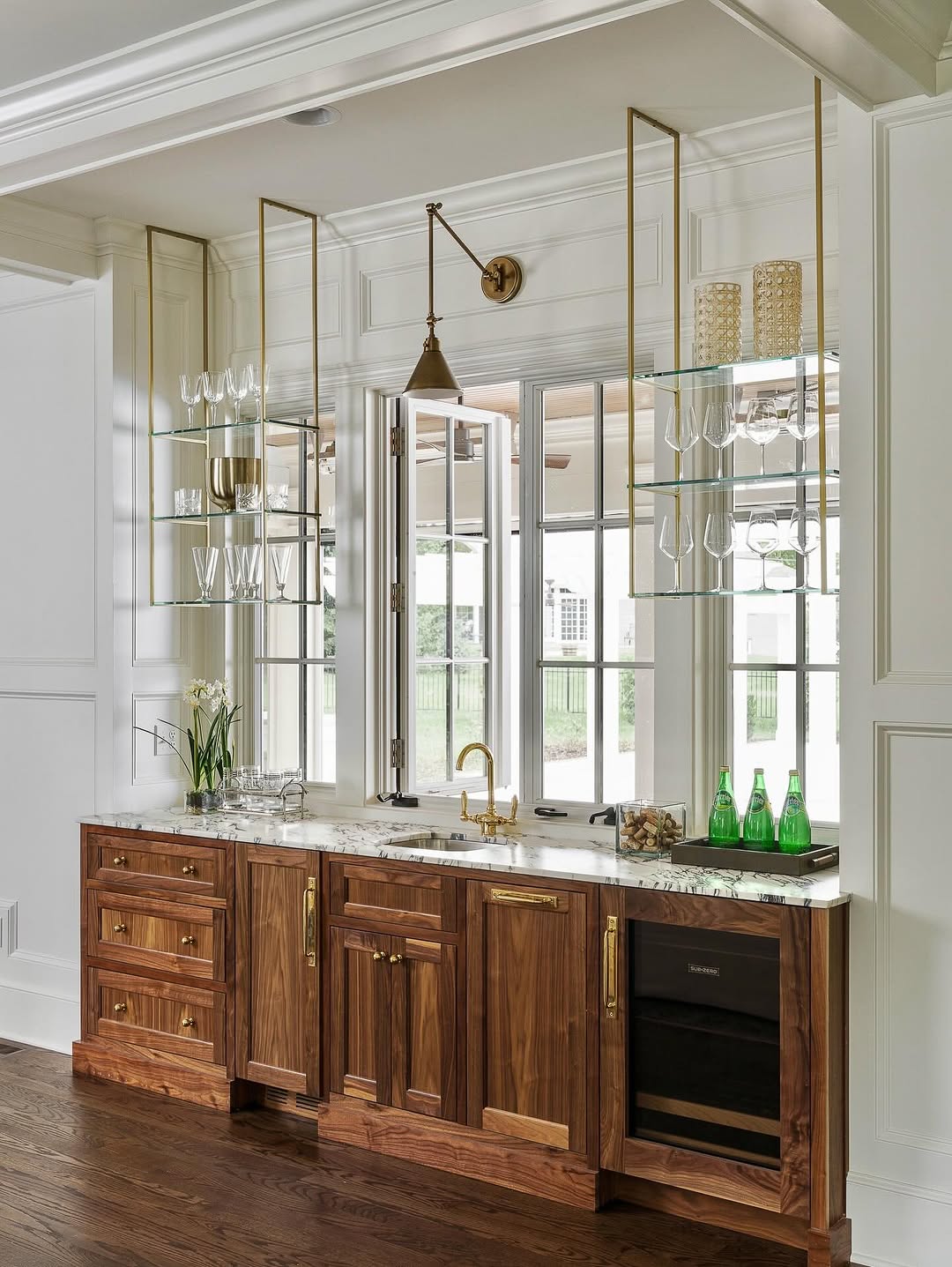
This setup exhibits glass shelving doing one thing extra structural than useful. As a substitute of filling the wall, the cabinets hold inside slim brass frames that drop from the ceiling, creating vertical markers across the window quite than competing with it. The consequence feels extra like structure than storage.
What stands out right here is how the cabinets respect the rhythm of the room. They maintain glassware calmly, by no means crowding the sightlines or blocking pure gentle. Strong cabinetry on this place would have closed within the window wall, however the transparency permits the view and daylight to remain dominant. I’m seeing glass cabinets used this far more typically in refined areas, the place storage exists, however the room’s proportions and light-weight nonetheless lead.
Glass cabinets that sit comfortably towards darkish, textured partitions
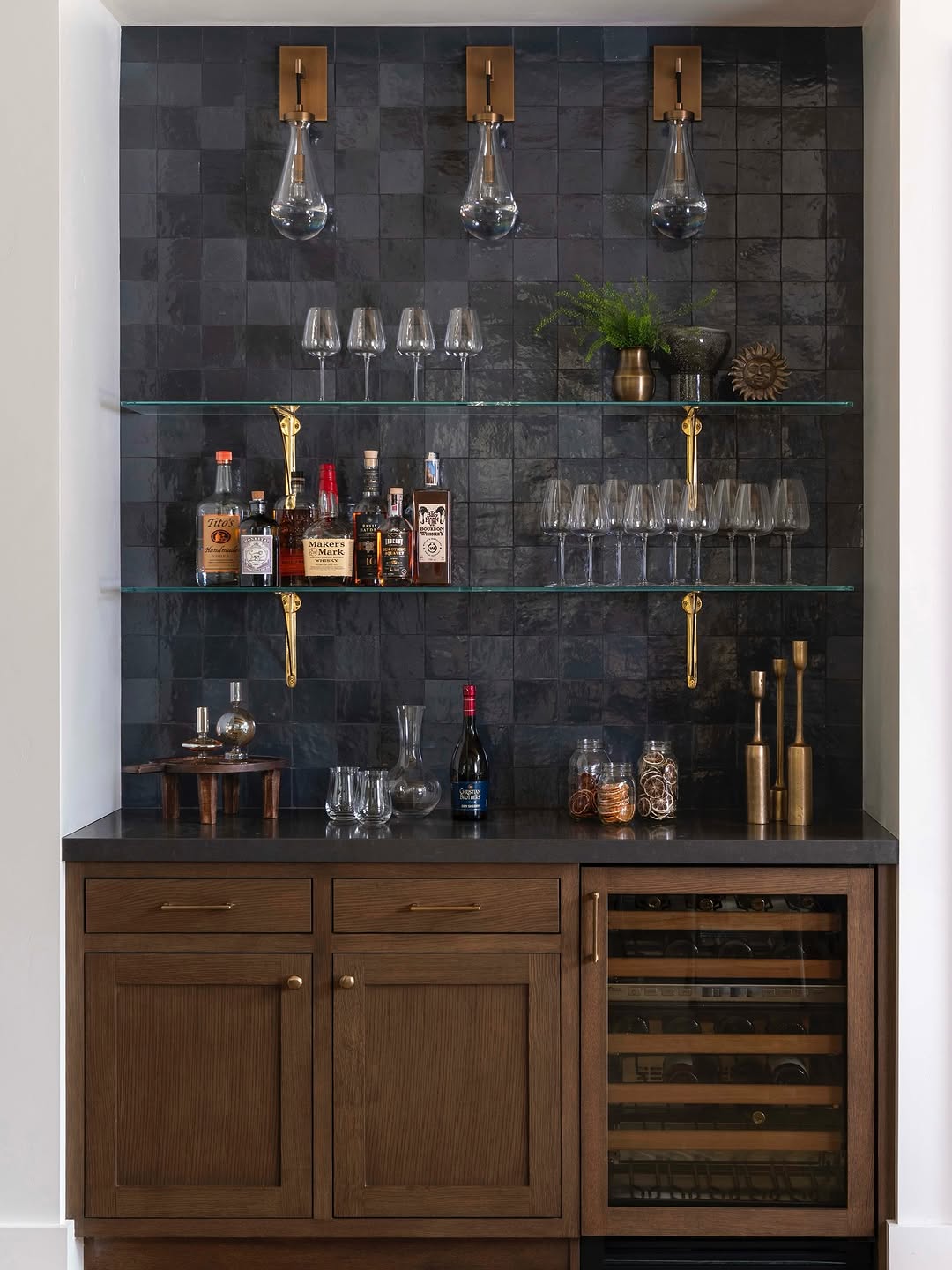
This bar setup exhibits how glass shelving can maintain its personal even towards a heavy backdrop. Set towards a darkish, tiled wall, the cabinets don’t attempt to disappear. As a substitute, they create distinction by staying gentle and exact whereas the floor behind them provides depth and weight. The brass brackets anchor the cabinets, giving them sufficient construction to really feel intentional quite than floating.
What stands out right here is how the transparency retains the wall from feeling overloaded. With bottles, glassware, and equipment all in view, strong cabinets would have compounded the darkness and made the area of interest really feel dense. The glass breaks that up, letting the feel of the tile stay seen and conserving the bar zone balanced. I’m seeing glass cabinets used this far more typically in devoted bar and lounge areas, the place temper issues, however visible readability nonetheless retains the setup usable.
Hanging glass cabinets that act as mushy room dividers
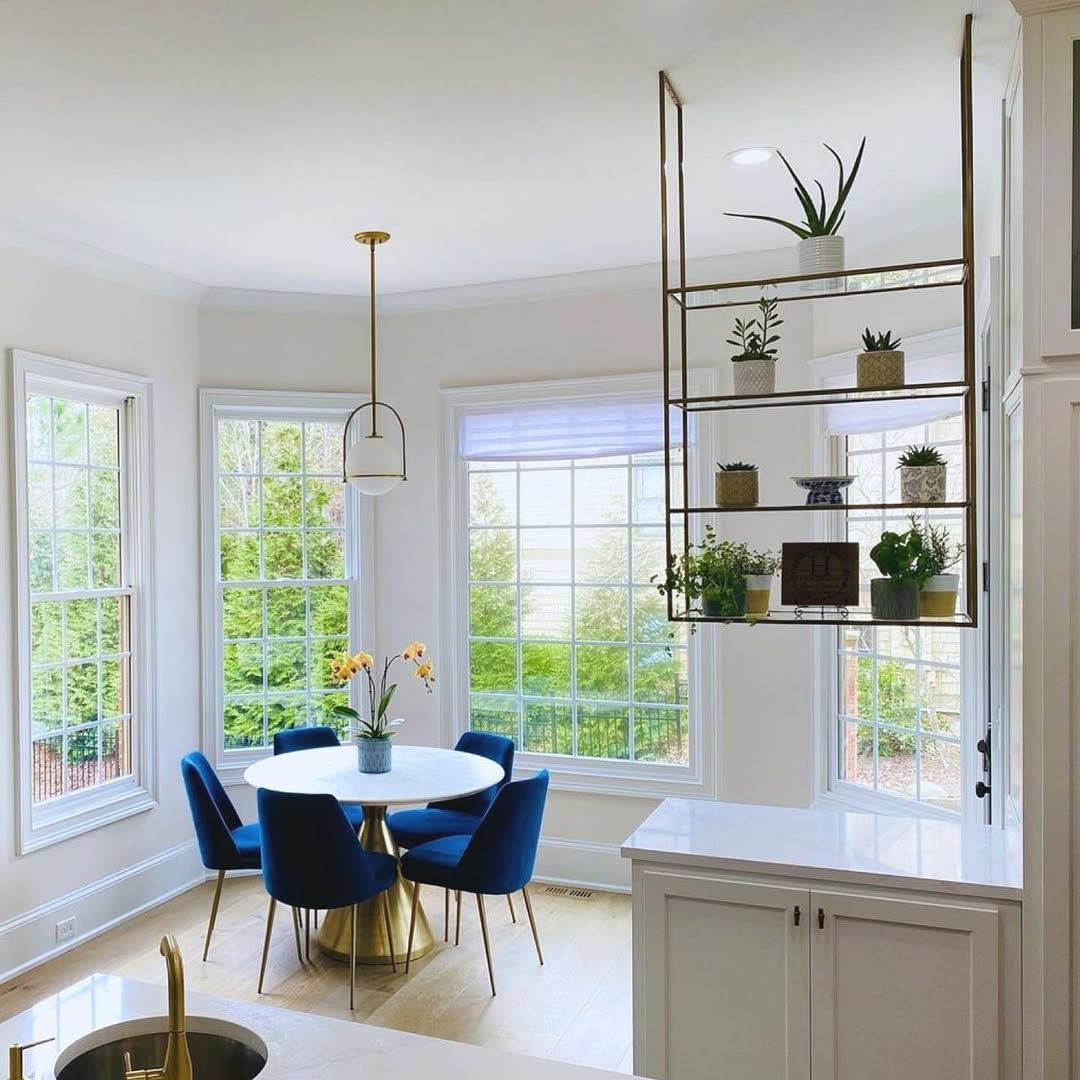
This setup makes use of glass shelving much less as storage and extra as a spatial software. Suspended from the ceiling close to the kitchen edge, the cabinets create a delicate boundary between the kitchen and eating space with out blocking gentle or closing off views. The brass body provides the construction definition, however the transparency retains it from feeling like a wall.
What stands out right here is how the cabinets contribute to circulate quite than interrupt it. Vegetation and small objects add life with out litter, and the open spacing lets daylight cross freely between zones. I’m seeing extra glass shelving used this manner in open-plan properties, the place separation is required however strong partitions would make the area really feel smaller. It’s storage doing double obligation as structure, with out saying itself as both.
Glass cabinets used inside cabinetry to lighten heavy built-ins
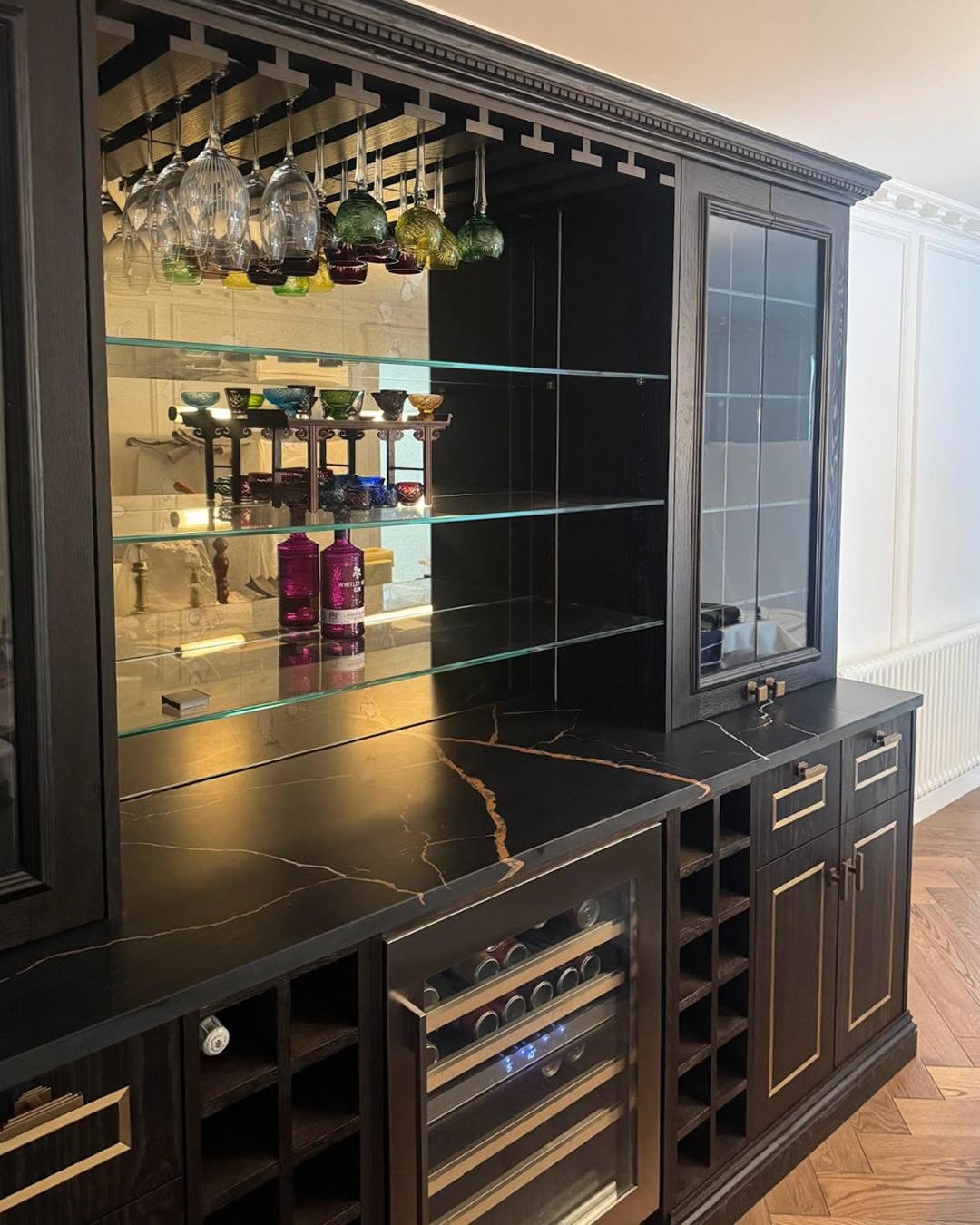
This bar cupboard exhibits how glass shelving can soften even the darkest, most substantial millwork. Set inside a deep, black cupboard body, the cabinets break up the mass and preserve the inside from feeling boxed in. The built-in lighting displays off the glass, including depth and making the storage really feel layered quite than dense.
What stands out right here is how the cabinets change the expertise of the cupboard with out altering its footprint. Strong cabinets would have made the unit really feel closed and heavy, particularly with darkish finishes all through. The glass retains the inside legible, letting glassware and bottles learn clearly whereas nonetheless permitting the cabinetry to really feel substantial from the surface. I’m seeing this strategy extra typically in bar cupboards and built-ins, the place visible weight must be managed with out sacrificing richness or storage capability.
Glass cabinets paired with cabinetry as an alternative of changing it fully
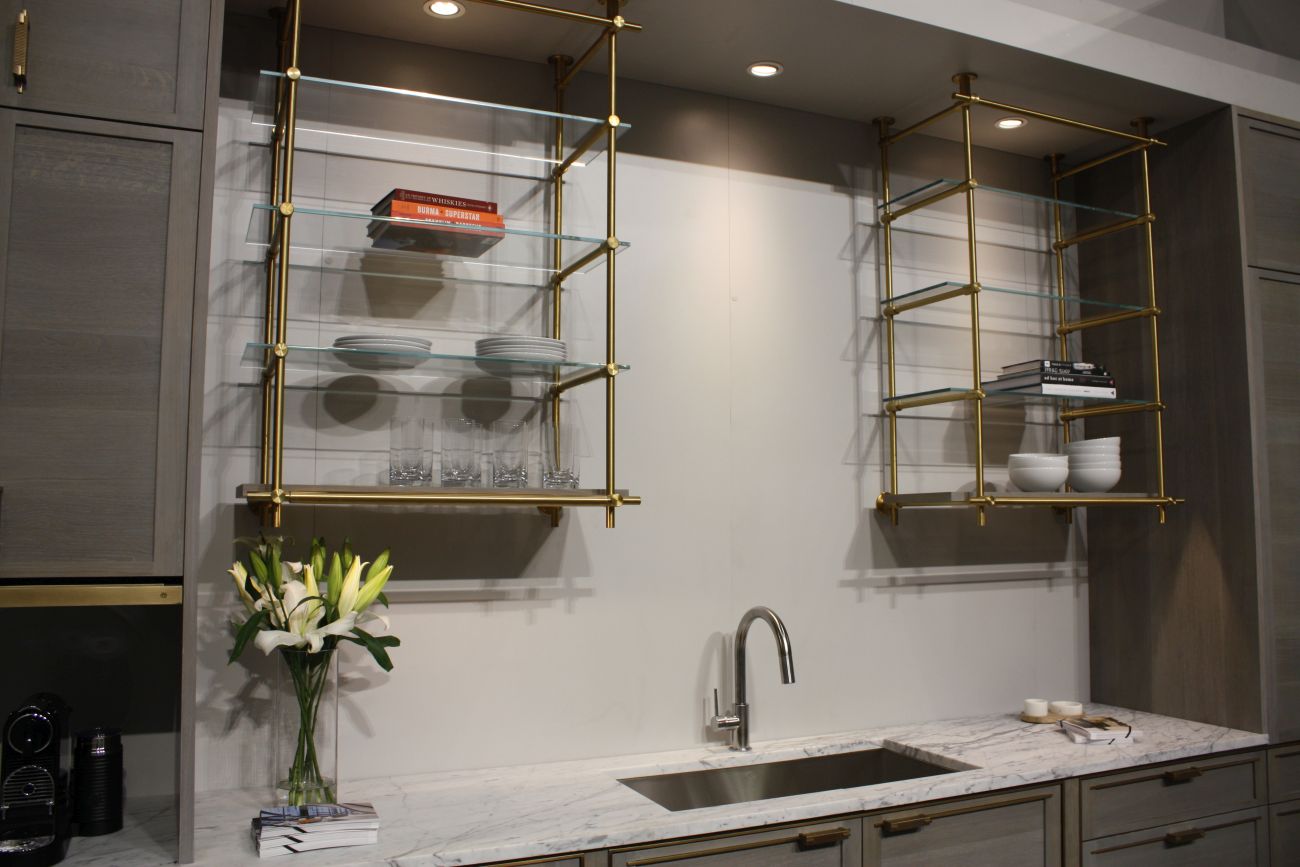
Right here, glass shelving works alongside closed cupboards quite than competing with them. The cabinets sit over the sink wall, conserving that zone open, whereas strong cabinetry on both facet handles bulk storage. The association feels deliberate, not transitional, as if each parts have been meant to coexist from the beginning.
What stands out is how the glass cabinets scale back visible density with out breaking the road of the kitchen. On a regular basis gadgets keep seen and accessible, whereas the cupboards take in weight and preserve the room grounded. I’m seeing this combine extra typically in kitchens that need openness with out giving up construction.
