
10 Dark Kitchen Trends I’m Embracing Instead of All-White Interiors This Year Leave a comment
For a very long time, the design world was satisfied {that a} kitchen needed to be brilliant and white to really feel spacious. I’ve adopted that rule myself for years, however going into 2026, I’m deliberately leaning into the shadows. Darkish kitchens aren’t only a temper; they’re a shift towards environments that really feel grounded, architectural, and extremely everlasting.

What I’m seeing now could be a transfer away from “flat” black towards complicated, layered darkish tones—charcoal, obsidian, and deep walnut—paired with high-contrast supplies like closely veined marble and heat metallics. As a substitute of a kitchen that displays gentle to cover its particulars, these designs use darkness to focus on texture and kind.
The next concepts characterize the instructions I’m following this 12 months, transferring previous the “protected” white kitchen into one thing far more thought of and visually highly effective.
Monolithic stone islands with built-in geometry
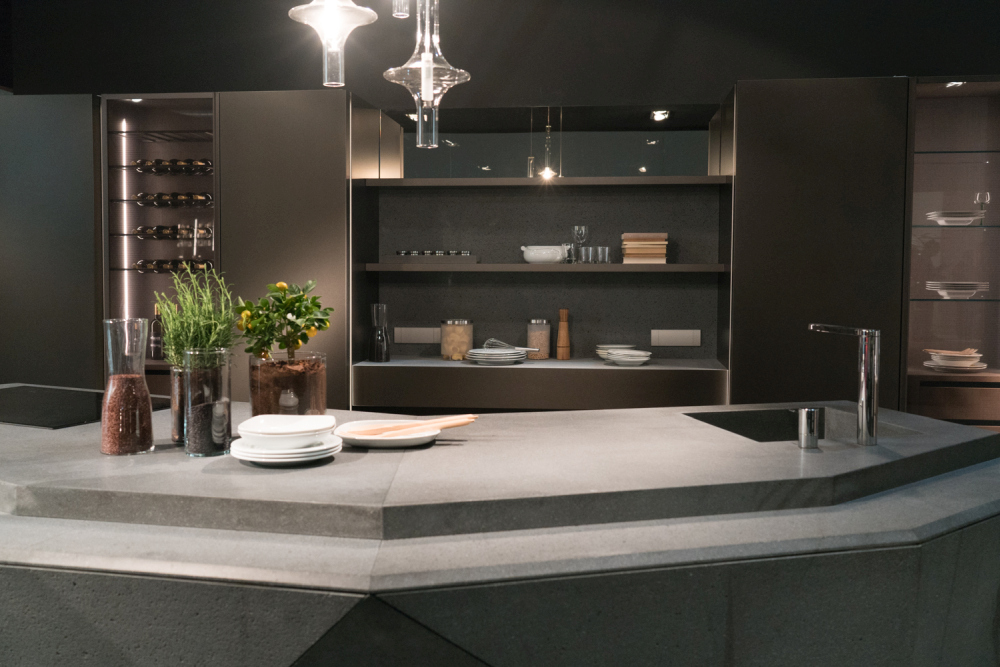
I’m drawn to how this kitchen treats the central island like a structural monument somewhat than a chunk of cabinetry. The faceted, concrete-gray stone creates a heavy horizontal line that anchors the room, whereas the darkish, open shelving behind it provides depth with out litter. That is precisely why I’m transferring towards darker tones—they permit the bodily form of the kitchen to turn out to be the first design characteristic.
Excessive-gloss obsidian with built-in process lighting
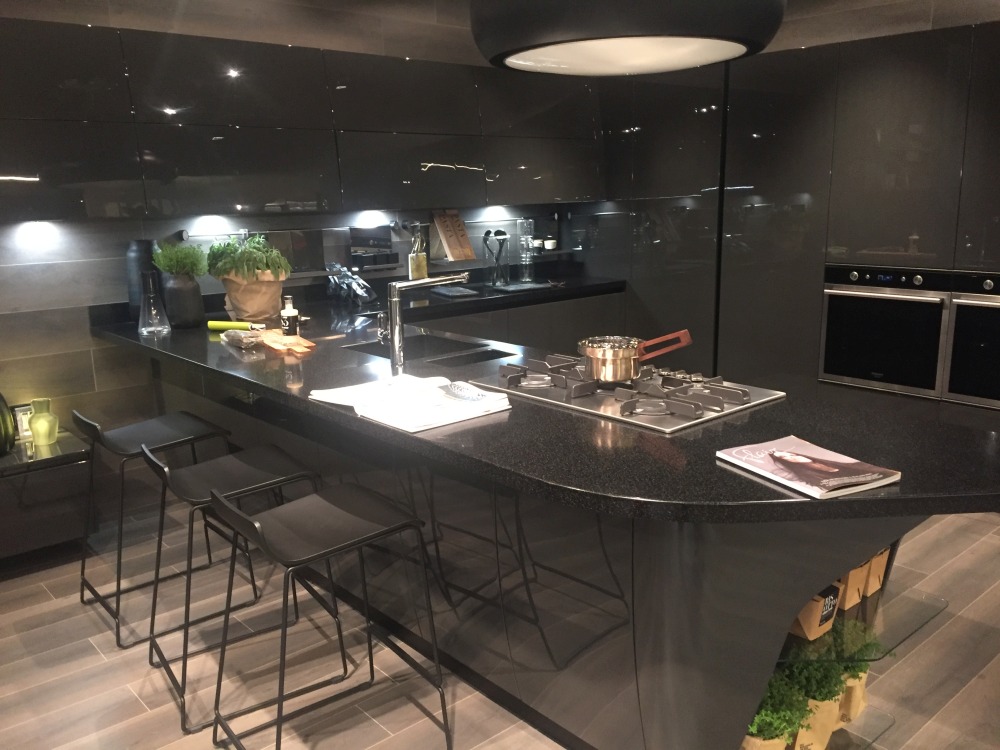
This setup proves {that a} darkish kitchen can nonetheless really feel extremely luminous. The high-gloss black cabinetry acts as a mirror, reflecting the sunshine from the built-in under-cabinet strips and the outsized round pendant. It creates a “layered” darkness that feels refined somewhat than closed-in. I like how the darkish work floor flows seamlessly into the breakfast bar, holding the visible footprint clear and architectural.
Textured walnut and charcoal monoliths
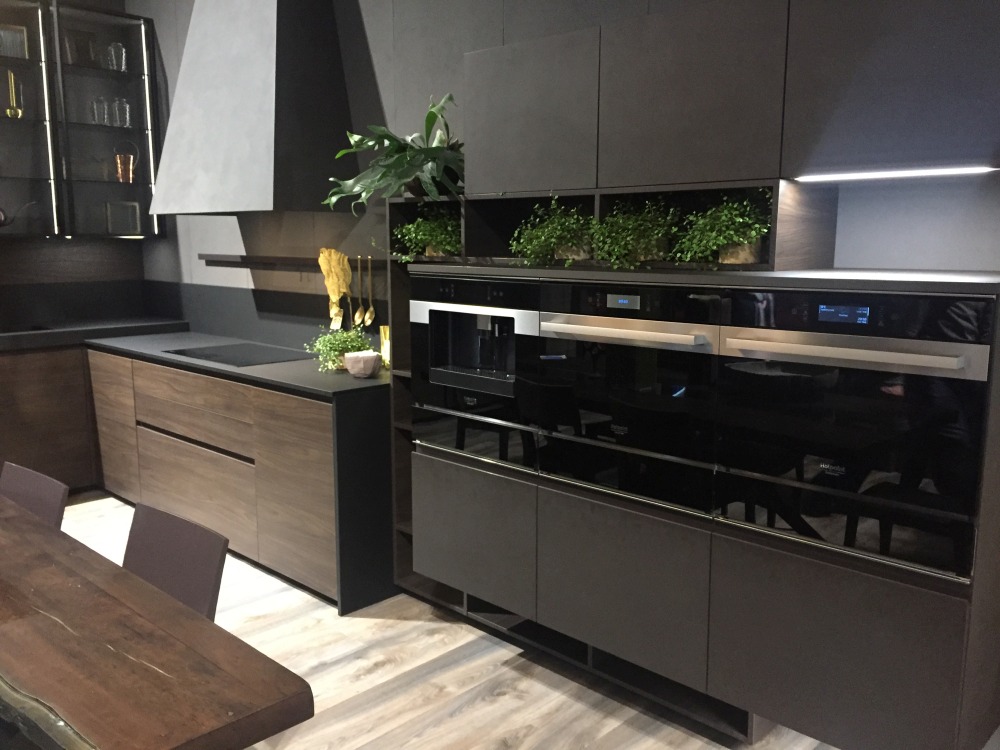
What stands out right here is the play between the natural heat of the darkish wooden grain and the matte charcoal higher models. As a substitute of a typical hood, the outsized, angled shroud turns into a structural aspect that mimics the structure of a fireside. It’s a wise manner to make use of darkish supplies to create a way of historical past and “fireside” in a contemporary area.
The “Hidden Bar” and charcoal cabinetry towers
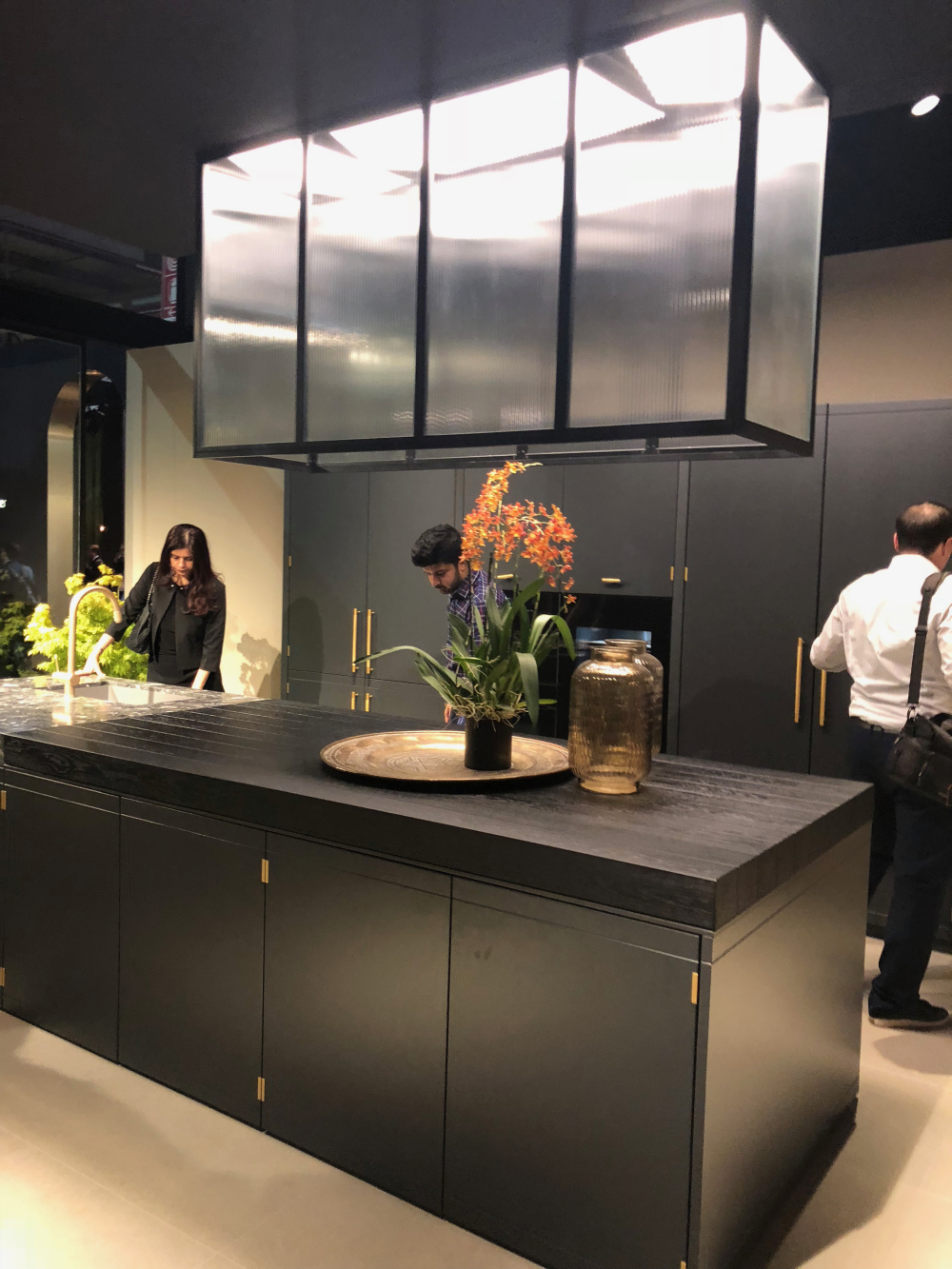
Persevering with the transfer towards seamless partitions of storage, this tall unit makes use of pocket doorways to disclose a devoted beverage station tucked inside a charcoal-gray shell. I admire how the darkish exterior makes the whole unit recede into the wall when closed, whereas the nice and cozy lighting inside creates a “jewellery field” impact when opened. It’s an ideal instance of how darkish kitchens prioritize the expertise of discovery.
Dramatic veining as a focal backsplash
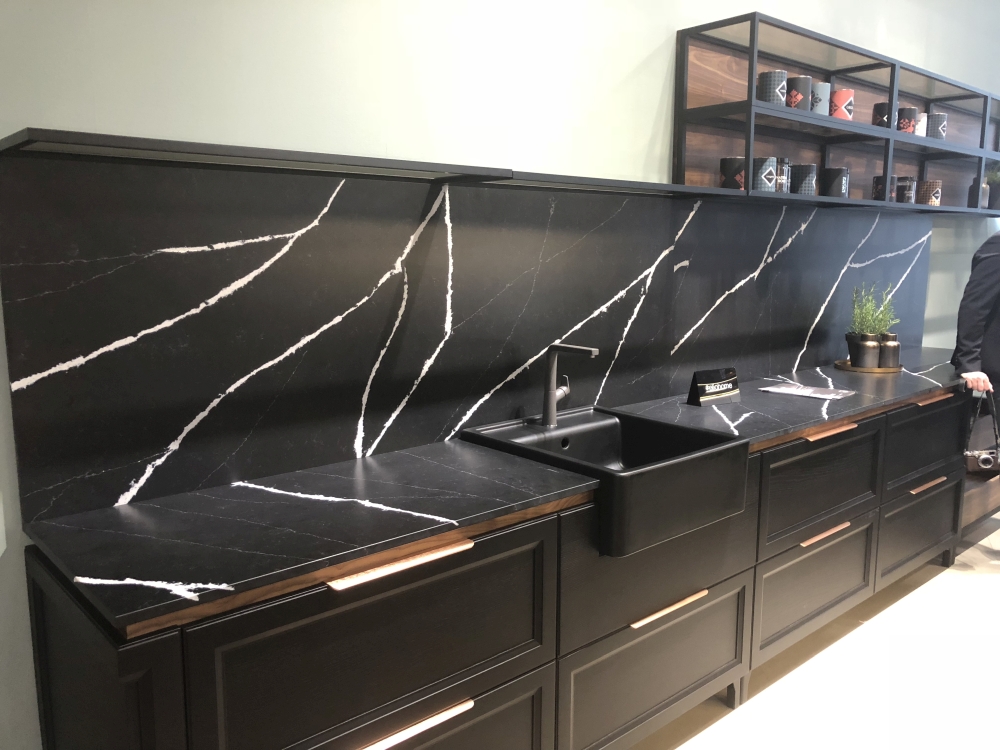
That is the form of assertion that makes all-white kitchens really feel unfinished. Utilizing a darkish, closely veined stone for each the countertop and a full-height backsplash creates a large quantity of visible motion. I’m drawn to how the copper-toned {hardware} gives simply sufficient heat to maintain the obsidian tones from feeling chilly. It’s a disciplined method to daring sample.
Matte black geometry and back-lit shows
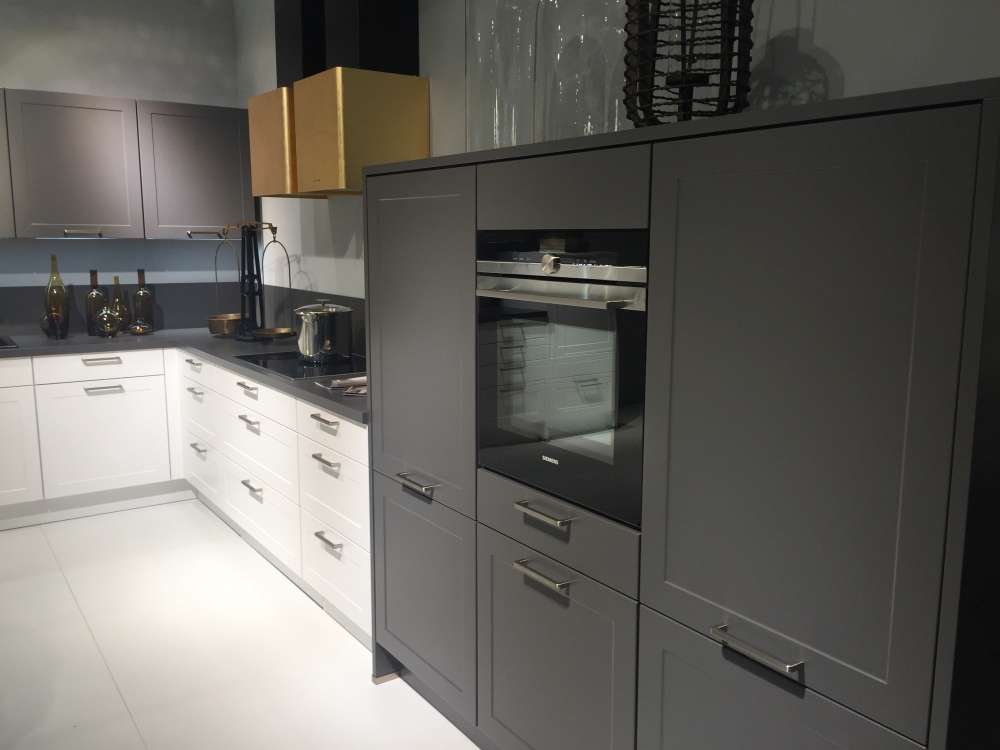
I really like how this design makes use of a geometrical, black-on-black tile sample so as to add refined texture to the wall. The distinction comes not from colour, however from the back-lit glass show circumstances that flip on a regular basis glassware into artwork. It’s a complicated option to deal with open storage in a darkish kitchen, holding it wanting curated and architectural somewhat than messy.
Blended metallics and industrial darkish tones
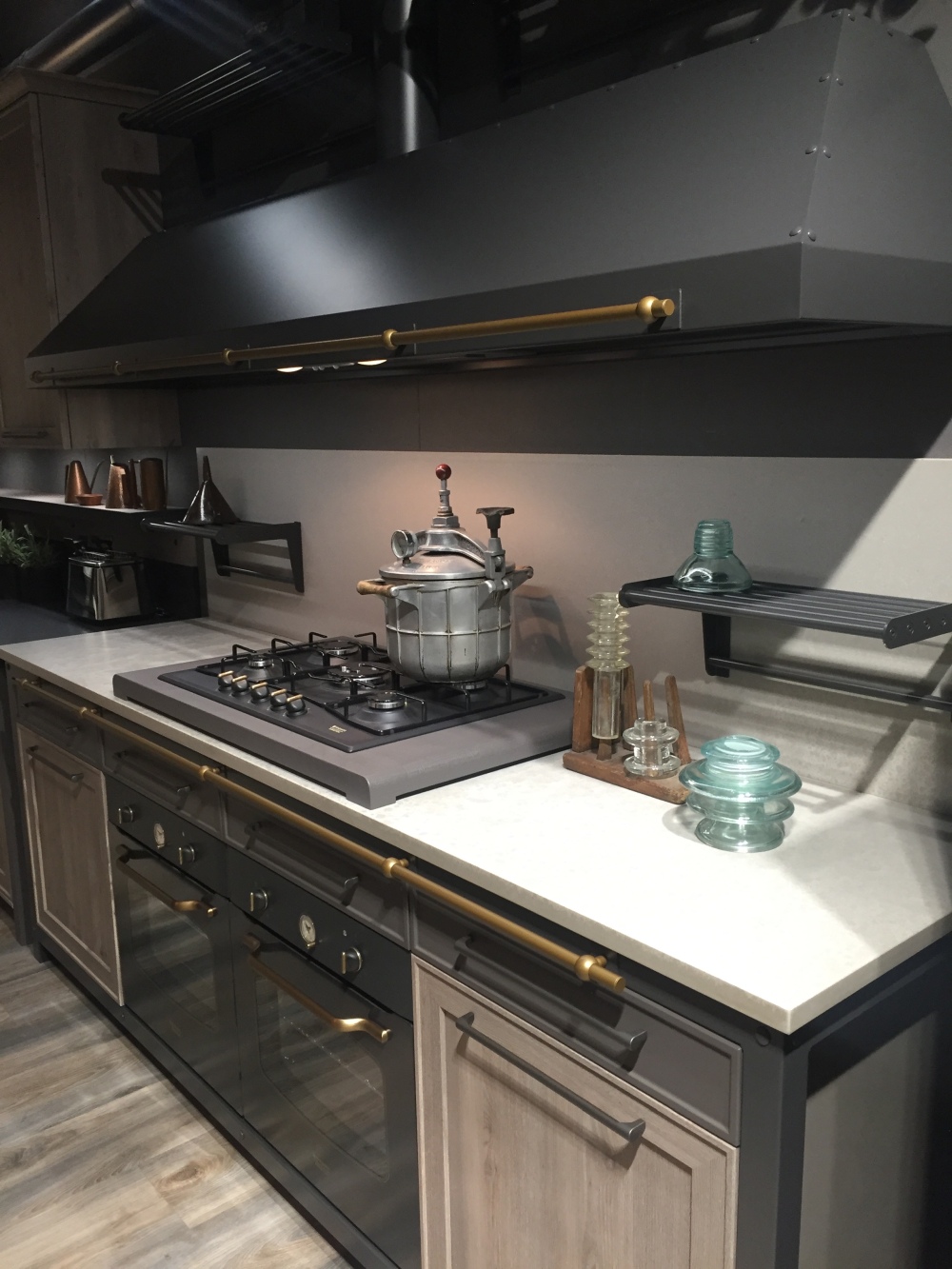
Darkish kitchens don’t must be glossy—they are often rugged and material-driven. This setup pairs charcoal panels with brass horizontal rails and a heavy, rivet-detailed hood. The darkish tones present the proper backdrop for the metallic accents to pop. It looks like a high-end workshop, prioritizing the “instruments” of cooking whereas sustaining a moody, thought of aesthetic.
Seamless metal and darkish wooden integration
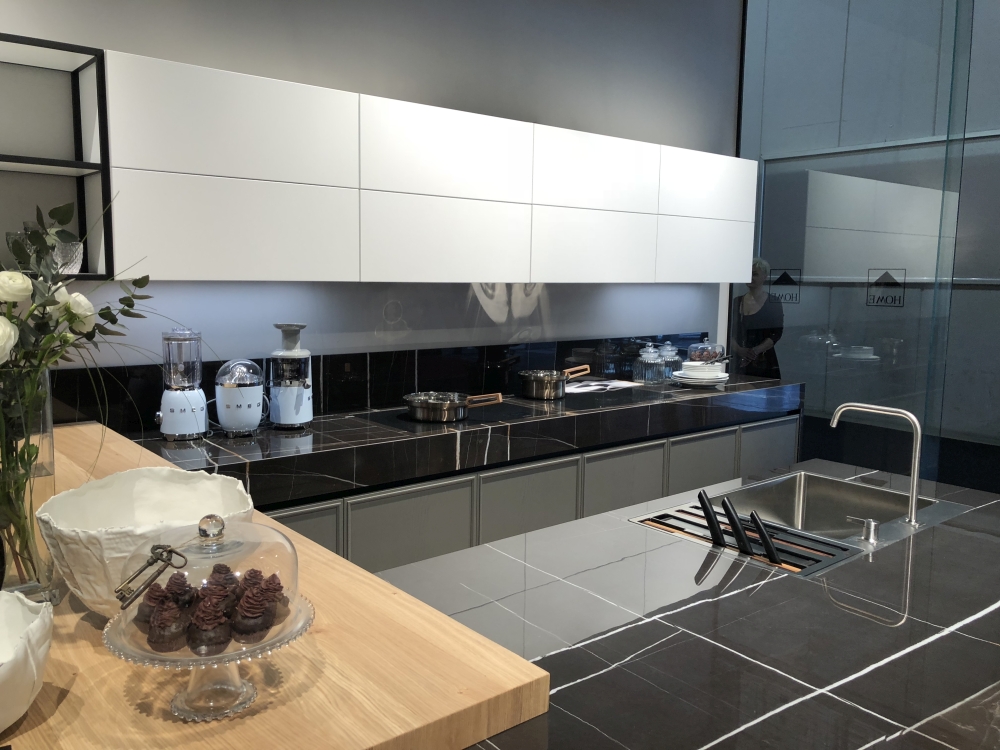
On this compact format, the chrome steel backsplash and worktop present a pointy, brilliant edge towards the nice and cozy, darkish wooden cabinetry. The usage of a steady horizontal LED strip below the cabinets retains the workspace useful whereas reinforcing the architectural strains. It’s an awesome instance of how darkish supplies could make a small kitchen really feel like a high-precision workstation.
Floating “Wing” islands with obsidian surfaces
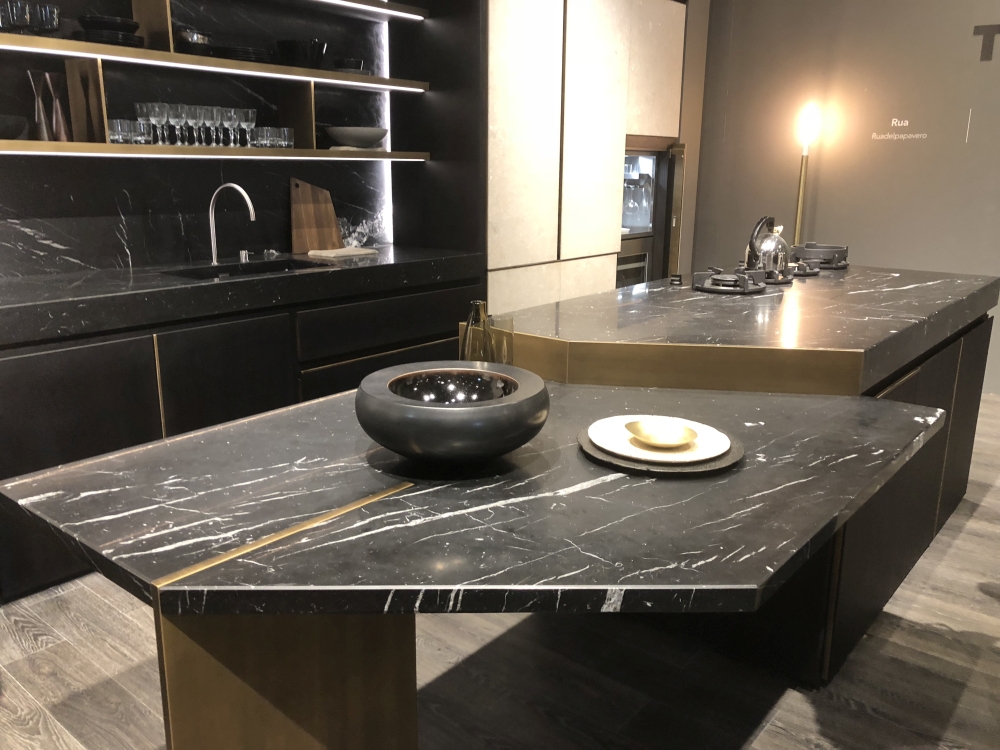
This island strikes away from the standard “block” and towards a futuristic, aerodynamic silhouette. The darkish, matte high is highlighted by a wrap-around LED strip that makes the whole construction seem to drift. I’m seeing extra of this in 2026: utilizing darkness and lightweight collectively to redefine the proportions of the kitchen furnishings.
Terrazzo-style islands and charcoal towers
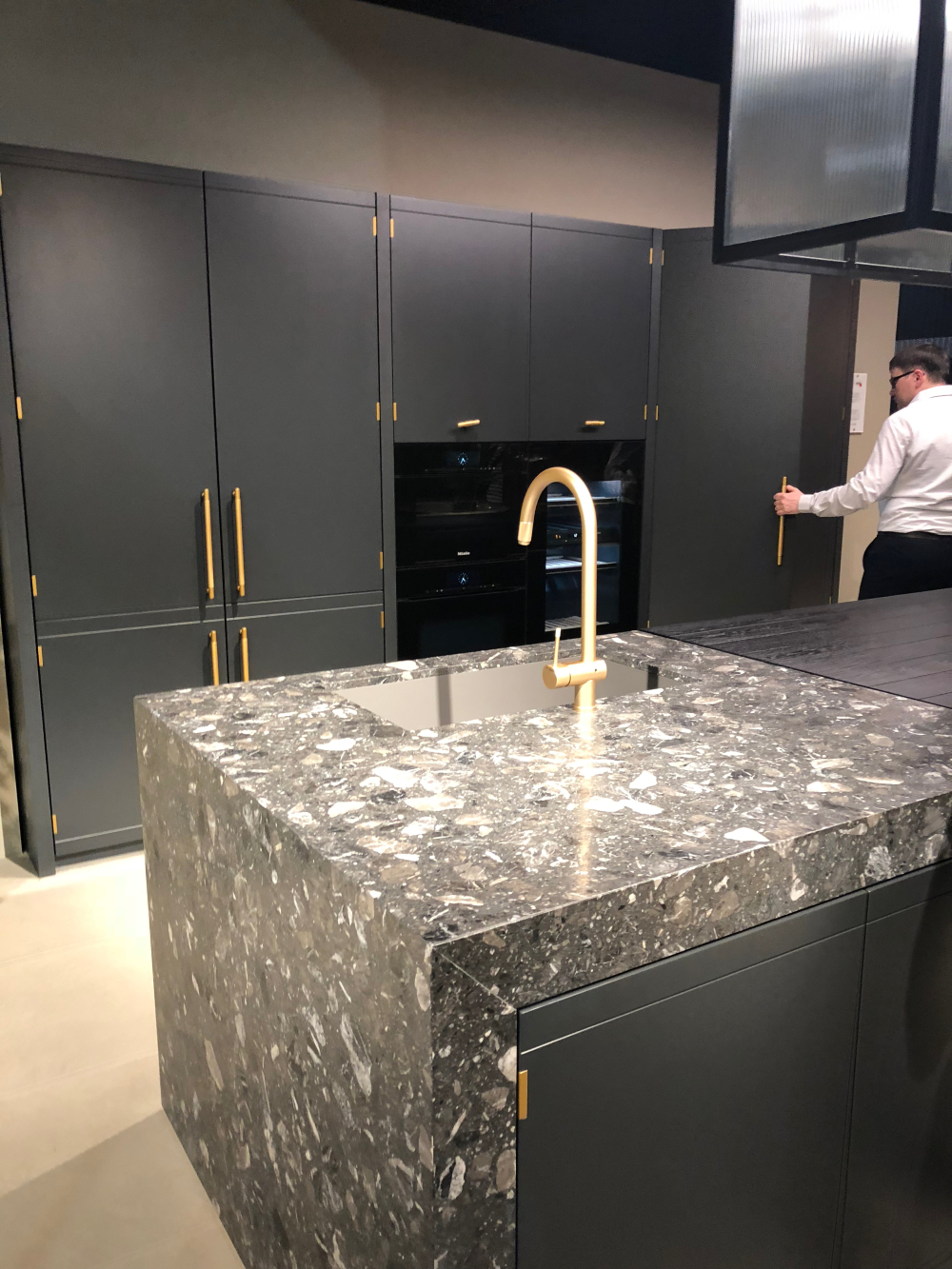
I’m obsessive about how the chunky, darkish terrazzo-style stone on this island provides a layer of uncooked texture to the room. When paired with the floor-to-ceiling charcoal cabinetry and gold vertical handles, it creates a kitchen that feels extremely everlasting. It’s a transfer towards “heavy” materiality that feels proper for the brand new 12 months.
